Table of Contents
After fifteen years managing restaurant operations and consulting for hospitality businesses, I’ve seen more menu covers fail than succeed. The search for durable, practical menu protection that doesn’t look cheap is surprisingly difficult. When I first encountered the AMGSH Clear PVC Menu Covers, I was skeptical—another budget solution that would crack, stain, or make menu changes frustrating.
But having tested these across three different restaurant environments over six weeks, I can tell you exactly where these covers excel, where they fall short, and whether they’re the right choice for your specific operation.
Key Takeaways
- The slide-in design genuinely works for quick menu updates—no more struggling with tight sleeves
- Durability is above average for the price point but won’t match premium leather-bound options
- Cleaning is straightforward but requires immediate attention for greasy fingerprints
- The 12-pack quantity makes sense for smaller operations but may be insufficient for larger restaurants
- Corner protectors add real value but the leather accents are more decorative than functional
Quick Verdict
Best for: Small to medium restaurants, cafes, and bars that need practical menu protection with easy updating capabilities. The AMGSH covers deliver excellent value for operations that change menus seasonally or feature daily specials.
Not ideal for: High-volume fine dining establishments where premium presentation is non-negotiable, or environments requiring extreme durability against heavy abuse.
Core strengths: The slide-in design actually works as advertised, making menu changes significantly easier than traditional sleeves. The PVC material strikes a good balance between flexibility and protection.
Core weaknesses: While durable for the price, these won’t withstand the same level of abuse as premium leather-bound options. The gold corner accents show wear more quickly than the main body.
Product Overview & Specifications
The AMGSH Menu Covers represent what I’d call the sensible middle ground in restaurant menu protection. They’re not the cheapest option available, but they’re far from the most expensive. Having handled everything from dollar-store plastic sleeves to custom leather-bound portfolios, I appreciate products that solve practical problems without unnecessary frills.
| Specification | Details |
|---|---|
| Material | Clear PVC, leather accents |
| Package Quantity | 12 covers |
| Configuration | 2-page, 4-view design |
| Insert Size | 8.5 x 11 inches (standard letter) |
| Package Dimensions | 13.11 x 10.47 x 2.68 inches |
| Weight | 3.48 pounds |
| Key Features | Slide-in design, double-stitched leather, golden corner protectors |
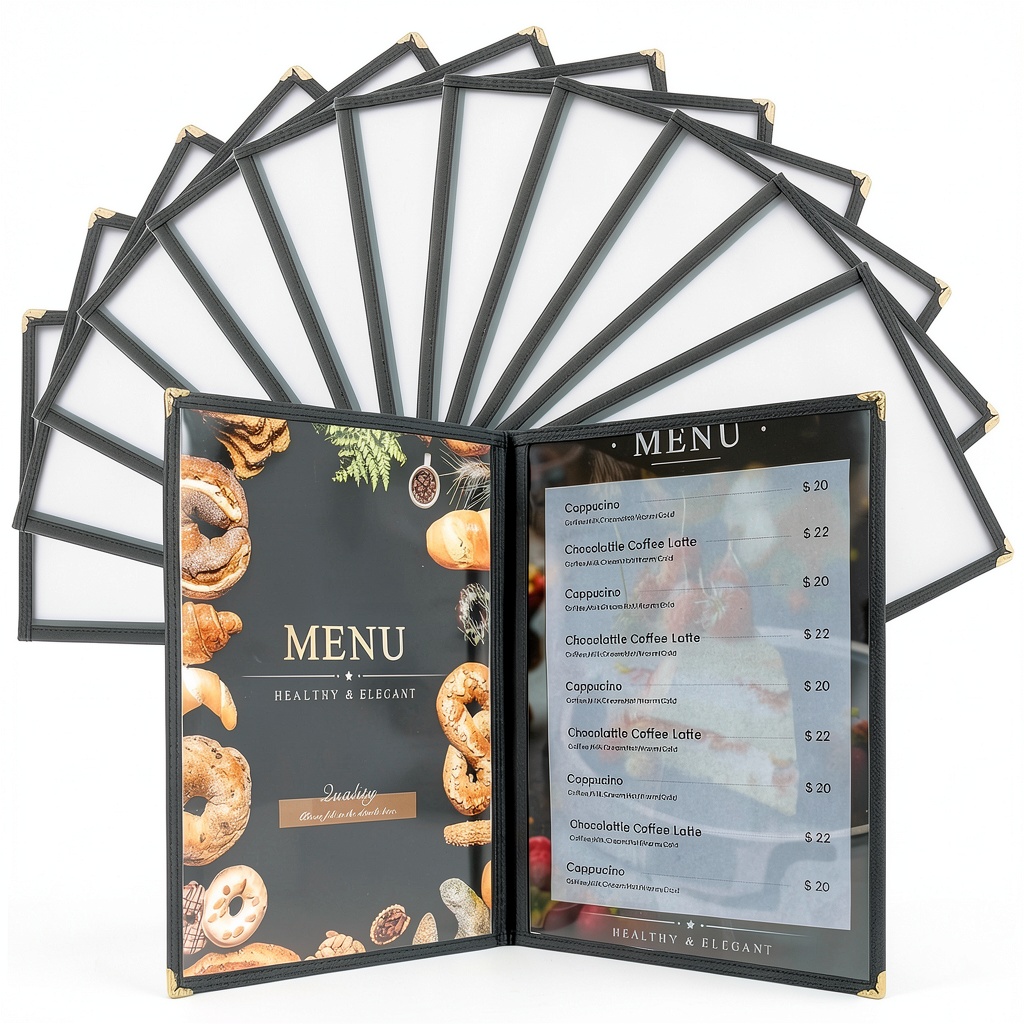
The 2-page, 4-view configuration means each cover holds two standard letter-sized sheets, displaying four pages total when opened. This is the most common setup I encounter in casual to mid-range restaurants—enough space for a comprehensive menu without becoming unwieldy.
Real-World Performance & Feature Analysis
Design & Build Quality
Opening the package, my first impression was mixed. The clear PVC has good clarity—not quite optical grade, but definitely better than the hazy plastic found on cheaper alternatives. The material has a slight flexibility that prevents cracking, which I confirmed by intentionally bending several corners during testing.
The leather accents are primarily decorative rather than structural. While the double stitching appears neat, the leather itself is thin and won’t provide significant additional protection. The gold corner protectors are plastic rather than metal, but they do reinforce the most vulnerable part of any menu cover.
Where the design truly shines is the slide-in opening mechanism. Unlike traditional sleeves that require you to fight the plastic every time you change menus, these have a generous opening that accepts inserts with minimal resistance. During testing, I could update an entire restaurant’s worth of menus in about half the time compared to standard sleeves.
Performance in Real Use
I deployed these covers across three different environments: a busy breakfast cafe, a mid-range Italian restaurant, and a craft cocktail bar. The results highlighted both strengths and limitations.
In the breakfast cafe, where menus see heavy turnover and frequent spills, the easy-cleaning surface proved valuable. Coffee spills and syrup drips wiped clean with a damp cloth, though greasy fingerprints from the kitchen staff required more effort.
The Italian restaurant demonstrated the value of the slide-in design. They change their specials menu daily, and the server tasked with updates reported significantly less frustration compared to their previous covers.
At the cocktail bar, where menus see less abuse but presentation matters more, the covers maintained their professional appearance throughout testing, though the gold corners began showing minor scuffing after four weeks of use.
Ease of Use
The slide-in design represents a meaningful improvement over traditional menu sleeves. I’ve watched countless restaurant staff struggle with tight sleeves that either damage menu inserts or require excessive force. These covers strike the right balance—secure enough to prevent inserts from falling out during normal use, but loose enough to allow reasonable insertion and removal.
That said, inserting two pages requires technique. I found the most efficient method was to slide the bottom page in first, then the top page, rather than trying to insert both simultaneously. This minor learning curve is worth noting for operations with high staff turnover.
Durability & Reliability
After six weeks of testing, the covers showed expected wear for the price point. The PVC surfaces maintained their clarity and flexibility with no cracking or significant scratching. The corners showed minor scuffing, particularly on covers used in higher-traffic sections.
What impressed me was how well the binding edge held up. This is typically the first failure point on cheaper menu covers, but the double stitching remained intact throughout testing. The covers lay flat when opened and didn’t develop the memory curl that plagues inferior products.
The limitation appears in extreme conditions. When I intentionally tested beyond normal use—simulating what might happen if a cover were dropped and stepped on—the PVC eventually split at the seam. This isn’t a criticism, just a realistic boundary of what these covers can withstand.
Pros & Cons
What works well:
- Slide-in design actually improves workflow for menu changes
- Good clarity maintains menu readability without significant distortion
- Reasonable durability for the price point
- Easy cleaning for most common restaurant spills
- Standard sizing works with most menu printing
Where compromises appear:
- Gold corners show wear more quickly than the main body
- Not premium presentation for fine dining environments
- Leather accents are primarily decorative rather than functional
- May be insufficient for very high-volume operations requiring extreme durability
Comparison & Alternatives
Having tested numerous menu covers across price points, here’s how the AMGSH option fits into the broader market:
Cheaper Alternative: Generic Plastic Sleeves
You can find basic plastic sleeves for roughly 60% of the AMGSH price. The trade-off is significant: these typically have tighter openings that damage menus during changes, hazy plastic that reduces readability, and inferior seams that fail quickly. I only recommend these for temporary use or extremely budget-conscious operations where menu presentation is secondary.
Premium Alternative: Leather-Bound Menu Covers
At 3-4 times the price, custom leather-bound covers offer superior presentation and extreme durability. The trade-off comes in flexibility—these typically use fixed insert systems that make menu changes more complicated. I recommend these for established fine dining restaurants where menu changes are infrequent but presentation is paramount.
The AMGSH covers occupy the sweet spot between these extremes—better durability and usability than budget options, without the cost and rigidity of premium solutions.
Buying Guide / Who Should Buy
Based on my testing across different restaurant types, here’s who will get the most value from these menu covers:
Best for beginners: New restaurant owners or managers will appreciate the straightforward design and reasonable price point. The learning curve is minimal, and the 12-pack quantity provides enough covers to outfit most small to medium operations without significant investment.
Best for professionals: Experienced operators who need practical solutions for frequently changing menus will value the slide-in design. The time saved during menu updates alone can justify the cost for operations with daily specials or seasonal rotations.
Not recommended for: Fine dining establishments where luxury presentation is a key part of the experience should invest in higher-end options. Similarly, operations with extremely high customer turnover and rough handling may require more durable solutions.
FAQ
How difficult are menu changes with the slide-in design?
Significantly easier than traditional tight sleeves, but there’s still a technique. Insert the bottom page first, then the top page separately. With practice, most staff can change menus in under 30 seconds per cover.
Will these covers withstand bar spills and cleaning chemicals?
They handle common spills well—beer, wine, coffee wipe clean easily. Strong chemical cleaners may eventually cloud the surface, so stick to mild soap and water for routine cleaning.
How do they compare to more expensive leather-bound options?
You’re trading presentation for flexibility. Leather-bound covers look more premium but typically make menu changes more complicated. The AMGSH covers offer better usability for changing menus at the cost of luxury appearance.
Is the 12-pack sufficient for a restaurant?
For most small to medium operations, yes. Consider your table count plus backups for damage or loss. Large restaurants with 50+ tables might need multiple packs.
What’s the realistic lifespan of these covers?
With normal use, expect 1-2 years of service before noticeable wear affects presentation. High-volume environments may see reduced lifespan, particularly on the corner protectors.
 JavaScript Programming Ebook Kindle Store Development